
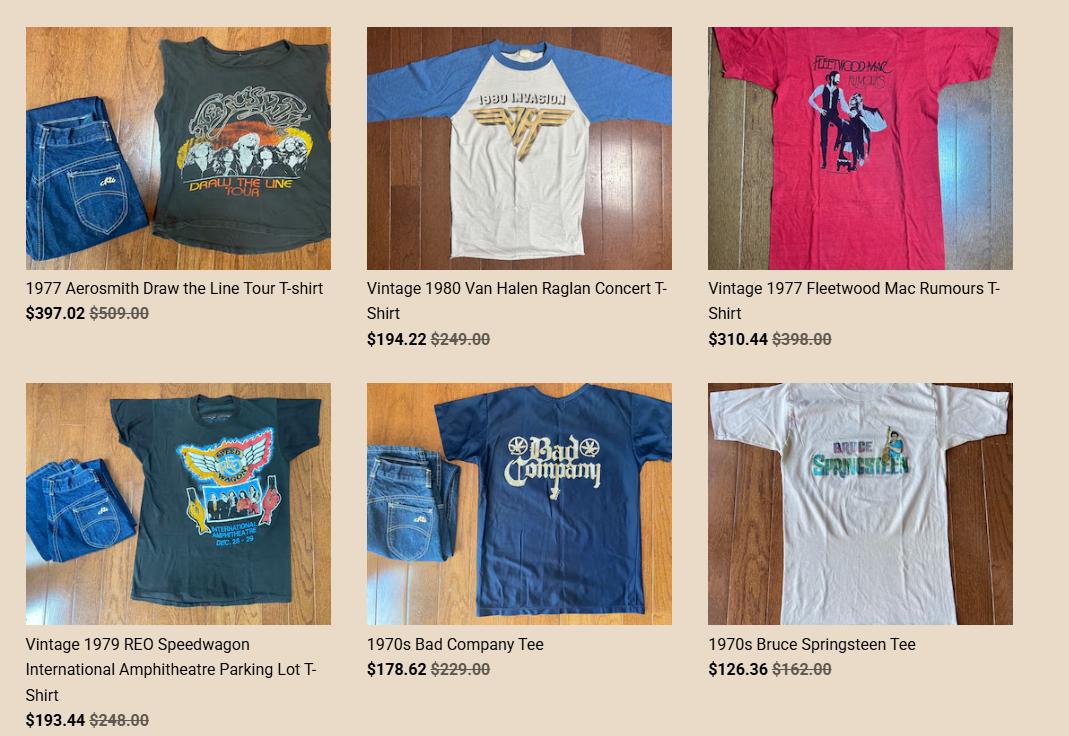
What to Look for When Buying a Vintage Band TeeThere is something special about a great vintage band tee. Maybe it's the faded graphic, the soft cotton that only decades of wear can create, or the feeling that you're holding a small piece of music history in your hands. Whatever it is, vintage band shirts have become some of the most sought-after pieces in the vintage world, and for good reason.
Whether you're just starting your collection or looking to invest in higher quality pieces, knowing what to look for can make all the difference. Here are a few things I always consider when I'm hunting for vintage band tees.
Age Isn't Everything, But It MattersOne of the biggest misconceptions about vintage band shirts is that anything with an old band printed on it is automatically vintage. In reality, many popular bands continue to release licensed merchandise today, and those shirts can look surprisingly similar to originals.A true vintage band tee was generally produced around the time the album was released or during the band's original tour. That doesn't mean modern reprints aren't cool, but they typically don't carry the same history or value as an original piece.
Learning to date a shirt by its construction, tag, and printing style is one of the most valuable skills a vintage collector can develop.
Pay Attention to the TagThe tag often tells part of the story. Brands like Screen Stars, Brockum, Hanes, Fruit of the Loom, Stedman, Signal, and Spring Ford are commonly found on authentic vintage band shirts from the 1970s through the 1990s.
That doesn't mean every shirt with one of those tags is valuable, but it does provide another clue about when the shirt was made. Tags changed frequently over the decades, and experienced collectors often use them to estimate age within just a few years.One missing tag doesn't automatically mean the shirt isn't vintage, though. Time, wear, and years of washing often remove tags completely.
Feel the FabricOne of the easiest ways to spot an older shirt is simply by touching it.Vintage cotton feels different. Many older shirts were made with lighter-weight cotton or soft 50/50 cotton-poly blends that have become incredibly comfortable after decades of wear. They often have a drape and softness that modern heavyweight shirts simply can't replicate.If a shirt feels stiff, overly thick, or brand new, it's worth taking a closer look before assuming it's an older piece.
Single Stitch vs. Double StitchCollectors often mention single stitching, and while it isn't the only indicator of age, it can be a helpful clue.Many shirts produced before the mid-1990s feature single stitching along the sleeves and bottom hem. Later production shifted toward double stitching as manufacturing changed.It's important to remember that single stitching alone doesn't guarantee authenticity, and double stitching doesn't automatically mean a shirt isn't vintage. Like everything else, it's one piece of a much larger puzzle.
Original Graphics MatterThe artwork is often what makes a vintage band tee truly special.Tour shirts, album promotion graphics, oversized back prints, and unique regional concert designs are generally more desirable than simple logo shirts. Original artwork that reflects a specific tour or moment in music history often becomes more collectible over time because it can never be recreated exactly as it was.
The more unique the graphic, the more interesting the piece usually becomes.
Don't Fear WearThis might surprise new collectors, but many of the most desirable vintage band tees show signs of a life well lived.
Small holes, fading, cracking in the print, repaired seams, paint marks, and even tasteful distressing often add character rather than taking away from it. They tell a story that brand-new clothing simply cannot.
Of course, major structural damage should always be considered, but don't overlook a shirt just because it has a little age showing. Sometimes those imperfections are exactly what make it special.
Beware of Modern ReprintsVintage-inspired clothing has exploded in popularity, and many companies now produce shirts designed to look old.
Some even include intentionally faded graphics, cracked ink, and artificially distressed fabric. While there is nothing wrong with buying a reprint if you simply love the design, it's important to know what you're purchasing, especially if you're paying vintage prices.
Ask questions, look at construction details, study the tag, and buy from sellers who are transparent about what they're offering.
Buy What You LoveAt the end of the day, the best vintage band tee is the one you'll actually wear.Some collectors chase investment pieces worth thousands of dollars. Others simply want the shirt that reminds them of their first concert or their favorite album growing up. Both approaches are equally valid because vintage is personal.
The best collections aren't built around price tags. They're built around memories, music, and pieces that make you smile every time you pull them from the closet.
A Final ThoughtOne of my favorite parts of running Elwood Vintage is finding band shirts that still have another chapter left to write. Every faded graphic, every cracked print, and every worn collar represents nights spent at concerts, road trips with friends, and decades of memories that continue with a new owner.
When you buy a vintage band tee, you're not just buying a shirt. You're preserving a small piece of music history and giving it the opportunity to live on for another generation.
Happy hunting,Chauntel Founder, Elwood Vintage